The United States Constitution is treated by many Americans as a sacred text beyond criticism.
But constitutions are not religious documents. They are frameworks for government, and frameworks must evolve when they stop serving the public fairly.
More than two centuries after it was written, the Constitution increasingly looks less like a guarantor of democracy and more like an obstacle to it.
If the United States truly wants a government that reflects the will of its people, the Constitution should be fundamentally rewritten to become more democratic.
An 18th-Century System Cannot Fully Serve a 21st-Century Nation
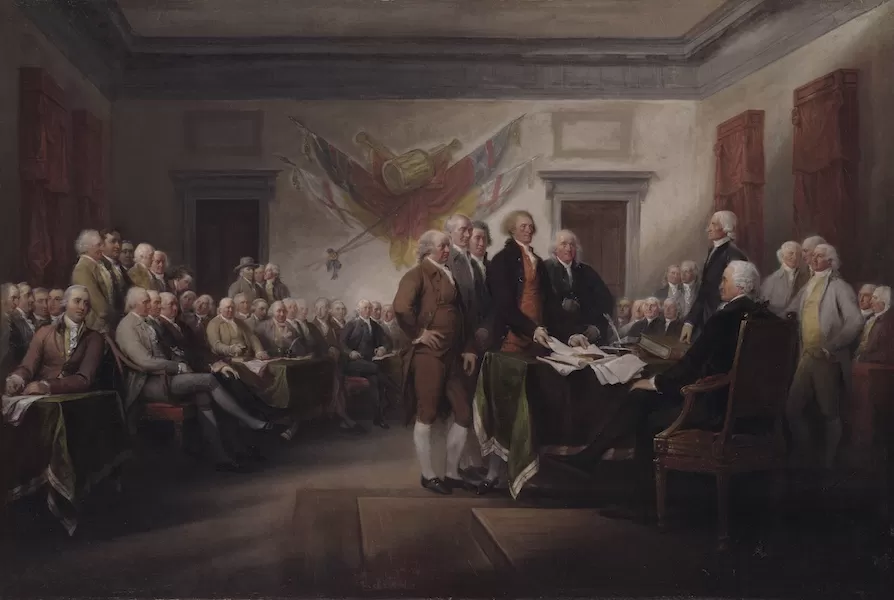
The Constitution was written in 1787 by a small group of wealthy men living in a nation of fewer than four million people.
Women could not vote. Enslaved people had no rights. Senators were not directly elected. The presidency was designed with deep suspicion of mass democracy.
Those anti-democratic assumptions remain embedded in the system today.
The Electoral College allows presidential candidates to win office while losing the popular vote.
That has happened multiple times in modern history, undermining public confidence in elections and leaving millions feeling their votes matter less depending on where they live.
In no healthy democracy should the candidate with fewer votes become president.
The Senate is even more distorted. Wyoming and California each receive two senators despite their enormous population difference.
This means a minority of Americans can control legislation, judicial confirmations, and national policy.
Rural voters are given disproportionate influence while urban populations are structurally underrepresented.
That imbalance may once have been a compromise to unite states, but today it weakens democratic legitimacy.
Rewrite the Constitution to make Reform
One of the Constitution’s biggest flaws is how difficult it is to change. Amendments require overwhelming political consensus in a country that is already deeply polarized.
As a result, outdated structures survive long after they stop functioning effectively.
Other democracies revise their governing systems regularly. Many parliamentary democracies rewrite election laws, modernize institutions, or expand voting rights through ordinary political processes.
The United States, by contrast, treats structural reform as almost unthinkable.
This rigidity creates paralysis. Americans can demand reform for decades—whether on voting rights, campaign finance, Supreme Court ethics, or representation—and still encounter constitutional barriers that prevent meaningful action.
A democratic system should be adaptable to the people it governs. The current Constitution often prevents that adaptability.
Minority Rule Has Become a Feature, Not a Bug
The modern American system increasingly empowers political minorities over majorities. Gerrymandering allows politicians to choose voters rather than voters choosing politicians.
The Senate filibuster lets a minority block legislation supported by most Americans. Lifetime judicial appointments give enormous power to unelected judges for decades.
Combined, these structures create a government where public opinion frequently has little connection to public policy.
That disconnect fuels anger, cynicism, and distrust. Citizens are repeatedly told that voting is the cornerstone of democracy, yet many watch popular policies fail despite broad support.
A more democratic Constitution would prioritize majority rule while still protecting minority rights. Those are not contradictory goals. Most modern democracies manage to balance both.
Rewrite the Constitution
Rewriting the Constitution would not mean abandoning American ideals. It would mean finally applying them consistently.
A modern constitution could abolish the Electoral College, guarantee voting rights nationally, establish clearer ethical standards for public officials, reform representation in Congress, and create stronger protections against corruption and authoritarianism.
The United States prides itself on being a democratic leader. But a democracy should not be judged by tradition alone. It should be judged by whether its institutions genuinely reflect the will of its people.
Right now, too often, they do not.
Leave a Reply